
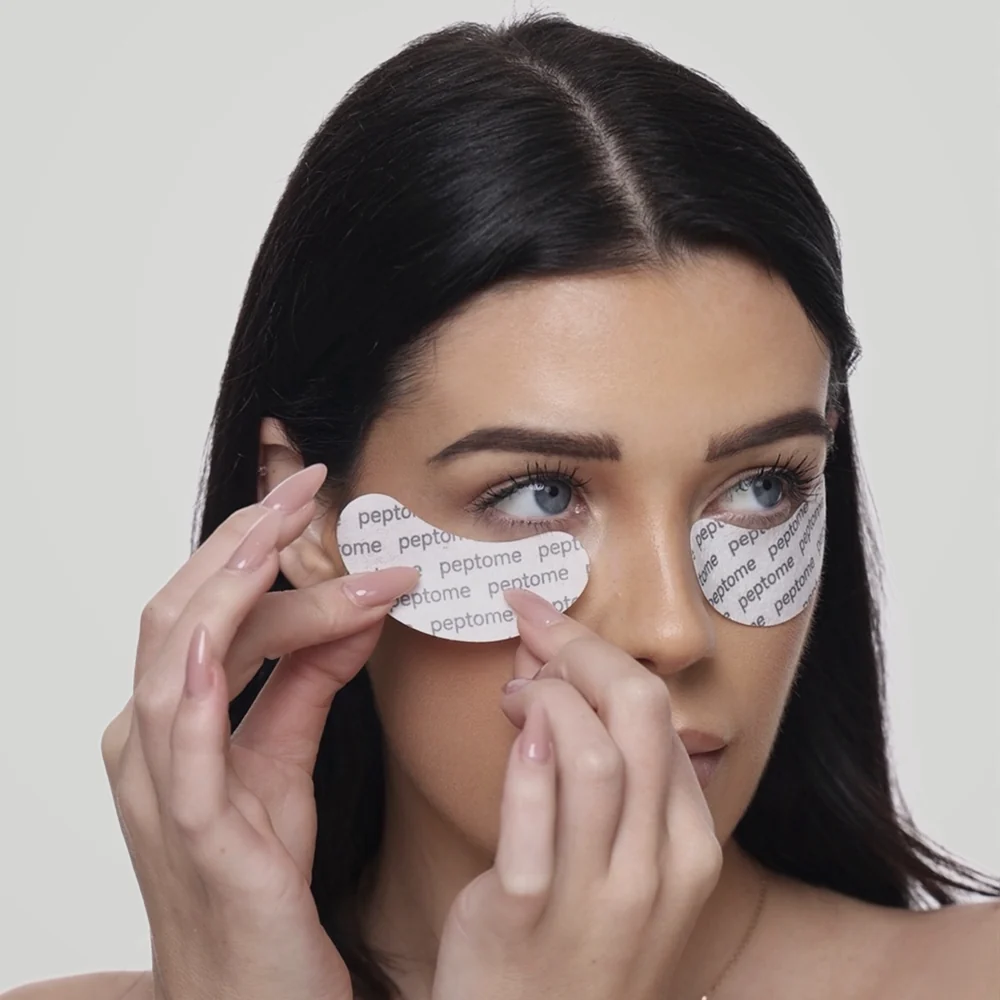
What under-eye patches are
An under-eye patch, or eye mask, is a crescent of gel or fabric soaked in a formula that sits under each eye for a short time. The good ones are hydrogel: a soft, cool gel that holds a lot of water and a few active ingredients, and stays put without sliding. You peel them off a backing, press them on, wait, and peel them away.
They've become a morning ritual for a simple reason: the under-eye is the first place tiredness shows, the skin there is thin, and a patch does something you can see in the mirror before you leave the house.
What twenty minutes can, and can't, do
Three things happen quickly. Cold narrows the small blood vessels under the eye, which is most of why skin looks less puffy afterwards. Caffeine does the same job chemically, and is the most common active in de-puffing patches for good reason. Water, held against the skin under light occlusion, plumps the surface so fine lines look softer for the morning.
Some things take longer. Ingredients such as peptides work over repeated use, supporting the look of firmer, smoother skin across weeks rather than minutes. And some things a patch won't change at all: the bone structure that casts a hollow, or pigmentation that's been there for years. Anyone promising otherwise is selling you a story.
What to look for on the label
Turn the box over. Most eye masks are water, glycerin, a gelling agent and a fragrance, with the hero ingredient a long way down the list. Here's what's worth looking for instead.
Actives you can name
Caffeine for puffiness. A peptide, such as the copper peptide GHK‑Cu, for the longer-term look of the skin. Niacinamide or hyaluronic acid are common supporting players. If the front of the box says "peptide" or "collagen", check the ingredients list to see which, and how far up it appears.
A full ingredient list, and no fragrance
The skin under your eyes is the thinnest on your face. Fragrance does nothing for it and is one of the most common reasons skincare stings. Good brands publish every ingredient; short lists are usually a sign that each one is there for a reason.
Price per pair, not per box
Boxes range from four pairs to thirty, so the box price tells you very little. Divide by the number of pairs. A box with fewer, better pairs often costs less per use than it looks.
Hydrogel, sheet, gold or collagen?
Hydrogel is the one to choose for most people: it holds more formula, stays cool longer and doesn't slip. Sheet masks are fabric soaked in serum; they're cheaper but dry out faster and sit less closely. Gold patches look expensive in a photo; the gold is decorative. Collagen patches are hydrating, but collagen molecules are too large to pass into the skin, so they work as a moisturiser rather than as collagen.
Puffy eyes, and dark circles
Puffiness responds best: a cold, caffeinated hydrogel patch from the fridge for fifteen to twenty minutes is about as effective as anything you can do at home. Morning puffiness after a short night, a flight or a salty dinner is exactly what they're for.
Dark circles are more varied. Shadowing from thin skin and visible blood vessels can look noticeably lighter after a cold, caffeinated patch, because the vessels narrow. Brown pigmentation and hollowness won't change in twenty minutes, and a patch is no substitute for sleep, sun protection and, if it bothers you, a word with a dermatologist.
How to use them, properly
- Keep the box in the fridge. Cold is half the effect.
- Start with clean, dry skin. Patches grip better and nothing sits between the gel and your skin.
- Wide end out, narrow end towards the nose, just below the lash line, not on the eyelid.
- Fifteen to twenty minutes. Make coffee, do your hair, answer emails.
- Peel from the outer corner and pat in what's left. Wait a minute, then apply concealer: it goes on smoother.
Where Peptome fits
We make one product: a cooling hydrogel under-eye patch built around the copper peptide GHK‑Cu, with caffeine for the twenty-minute de-puff. Eighteen ingredients, every one named on our ingredients page, no fragrance, no alcohol. Six pairs a box, made to live in your fridge. If you want to know more about the peptide itself, our GHK‑Cu guide covers what the research does and doesn't support.